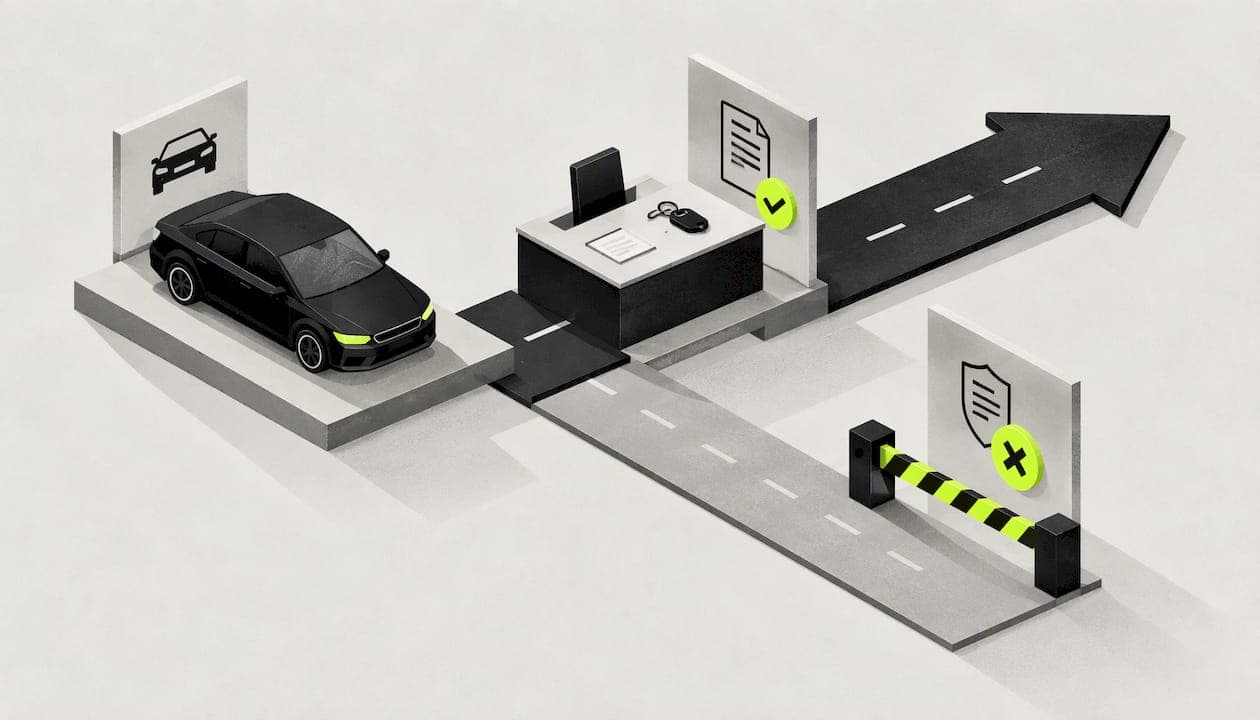
In most cases, yes. A lapsed policy does not stop you from signing over a title, and many states let ownership change hands without any insurance check. What a lapse does change is your risk: until the title is transferred, the car is still yours, and so is the liability that comes with it. If the car is dead, wrecked or just sitting in your driveway, there is a simpler route than a private sale. A local junk car buyer tows it away, pays you cash and takes the car out of your hands in one visit.
TL;DR
- Selling a car with no insurance is usually allowed, but rules differ by state, and the buyer normally needs insurance to register the car, not to buy it.
- Do not let the car be driven, even for a test drive, unless someone is insured. An uninsured seller can be left holding the bill if a test driver crashes.
- Finish the paperwork properly: signed title, bill of sale, odometer statement, lien release if there is a loan, and a notice of sale to the state where one exists.
- If the car does not run, a junk car sale avoids the test drives, strangers and storage problem. The car moves on a tow truck, so insurance on the road is not an issue.
- If you still carry a policy, cancel it only after the sale is final and the title has changed hands.
Table of Contents
- Does selling a car require insurance?
- The real risk is liability, not legality
- Paperwork you need before you sell
- If you have no title, the path changes
- When the car does not run: why a junk sale makes sense
- How we buy uninsured junk cars in Cincinnati
- Perspective: what we tell callers about insurance
- If the car is on the street
- Insurance and cancellation after the sale
- How to protect yourself from payment and fee problems
- Choosing between a private sale and a junk sale
- FAQ
- Sources
Does selling a car require insurance?
There is no single national rule. Titling and registration are handled by each state, so the answer depends on where you live and where the buyer lives. Experian's guide to title transfers explains that many states permit a title transfer with no insurance, while some require it from one or both parties, and that your state DMV controls the rule that applies.
Two examples show how much states differ. The Texas DMV says a buyer must show proof of liability insurance to title and register a vehicle, but may apply for a title only without that proof. New Mexico's Motor Vehicle Division says a vehicle that cannot yet be insured may receive a title only, with no plate issued until insurance is in place.

The pattern is common. The title says who owns the car. Registration and plates are what require insurance. A seller with no policy is rarely the one who gets stopped by the paperwork, because the insurance check usually falls on the buyer at the registration counter.
What about Ohio?
In Ohio, the step that matters most for a seller is notarization. According to the Ohio BMV, the seller completes the assignment of ownership on the back of the title and has their signature notarized before handing it to the buyer. If the title is held electronically, the BMV's casual-sale form, the BMV 3770, serves the same purpose and also needs a notarized seller signature. Confirm the details with your county Clerk of Courts title office or the BMV before you sign, because forms and procedures get updated.
The real risk is liability, not legality
The law may let you sell, but the common-sense advice from every major guide is the same: do not treat an uninsured car as a car with no risk. Until the sale is complete, you are still the owner.
Car and Driver warns that an uninsured seller may stay financially responsible if a prospective buyer test-drives the car and causes a crash. Experian says the same about test drives in the uninsured-seller scenario. This is the main reason that private sales of uninsured cars go wrong.
There are three situations where the risk shows up:
- Test drives. A stranger behind the wheel of a car with no coverage is the worst case. If you must allow a test drive, put the car on a policy first, or let the buyer look it over and have a mechanic inspect it with you in the passenger seat while the car stays parked.
- A sale that is agreed but not finished. A handshake and a deposit do not move ownership. The title does. If the buyer drives away before the title is signed, you could be the registered owner of a car that is no longer in your control.
- A buyer who never retitles. If the new owner does not put the car in their name, tickets, tolls and worse can land on you. The Texas DMV says filing its Vehicle Transfer Notification within 30 days updates the record and protects the seller from later parking tickets and toll violations attributed to the buyer.
The lesson is not that you need a policy to sell. It is that you need a clean, documented handoff, and as few unknowns as possible while the car is still in your name.
Paperwork you need before you sell
The documents are the same whether the car is insured or not. Gather these before you list the car or call a buyer:
- The title, properly assigned. The Wisconsin DMV lists the properly assigned title, the federal odometer statement, any brand disclosure, a lien release and the buyer's details and sale price as the core items. States differ in the exact forms, but the list is a good checklist anywhere.
- A lien release, if you ever had a loan. If a lender appears on the title, the Connecticut DMV says a lien-release letter is required or the transaction will not be processed. It is a Connecticut rule, but lenders and states handle liens in a similar way elsewhere.
- A signed bill of sale. It should show the vehicle, buyer, seller, price, date, mileage and signatures. The Wisconsin DMV says sellers may keep a copy, and it is smart to do so. Palm Beach County's consumer-affairs guide also advises a signed bill of sale.
- Your photo ID. The name on your ID should match the name on the title.
- Safe payment. The same Palm Beach County guide recommends cash, a money order or a cashier's check.
Selling to a private buyer, step by step
- Confirm the title is in your name and that there is no lien. If you are not sure, ask your lender or check your state's title records.
- Agree on a price and how you will be paid. Do not release the keys or title until payment clears or you hold cash.
- Sign the title in front of a notary if your state requires it, which Ohio does for the seller's signature.
- Complete the odometer disclosure and the bill of sale, and keep copies of everything.
- Remove your license plates if your state directs it. The Wisconsin DMV says sellers must remove plates in ordinary sales.
- Notify the state of the sale if it has a seller notification. Florida sellers, for example, should file a Notice of Sale within 30 days, according to the Palm Beach County guide, which also warns that skipping recommended steps can contribute to a wrecker-operator lien for unpaid towing and storage.
- Only then cancel the insurance, if you have any.
If you have no title, the path changes
Many people who ask about selling a car with no insurance also have a second problem: the car has been sitting, the registration has lapsed and the title is in a drawer somewhere or gone. That is common, and it is fixable.
Selling a vehicle with no title in hand is illegal in most places for private sales only in the sense that the buyer cannot register it without paperwork, and the usual fix is a duplicate title. Palm Beach County's guide advises getting a duplicate title when the title is missing. Some states have narrower options: the Connecticut DMV allows an in-state sale without the original title when the vehicle is titled to the seller, using Form Q-1 and Form H-6B, and the Wisconsin DMV says a replacement title is not required for a junk sale.
If you are in the Cincinnati area, we have laid out the options in two guides: six items to get a duplicate car title, or sell without one and four paths to junk a car without registration. If your tags have expired too, the walkthrough on selling a car with expired tags covers the state checks.
When the car does not run: why a junk sale makes sense
A private sale of a non-running, uninsured car is a lot of work for a small payoff. You list the car, field messages, meet strangers, explain why it has no plates, and then somebody wants to test drive a car that cannot legally be driven. Every step adds the liability described above.
Selling to a junk car buyer cuts most of it out:
- No test drive. Nobody drives the car. It is loaded onto a truck.
- No insurance question on the road. The car travels on a tow truck, so the usual worry about an uninsured vehicle on public roads does not arise.
- One visit. The quote, the pickup and the payment happen together.
- Any condition. Wrecked, flood damaged, high mileage, salvage or just not starting: these are the cars a junk buyer expects to see.
The trade-off is price. A junk buyer pays for what the car is worth as scrap and salvage, which depends mainly on weight and condition. A running, clean, titled car with a few years left in it usually fetches more in a private sale, and our own guide on trading in versus selling privately explains where each route makes sense. But if the car has no insurance, no plates, no working engine and no patience left in you, the junk route is usually the faster, safer one.
The same logic applies to mechanical failures. If the engine is gone, you can read about how to sell a car with a blown head gasket as is. Pickup-up trucks follow the same flow, as in our guide to junking a truck in Cincinnati.
How we buy uninsured junk cars in Cincinnati
We are a local yard serving Cincinnati and the Tri-State area, and we buy cars, trucks and SUVs in any condition: not running, wrecked, salvaged, high mileage, flood damaged or missing a title. We do not require you to have insurance on the car.
Here is how a sale works:
- Get a quote. Use our instant cash offer page or call. Quotes are free and there is no obligation, and no pressure to accept.
- Schedule pickup. Towing is free with every purchase, with no hidden fees for the tow.
- Hand over the car and the paperwork. If you do not have a title, we can still buy the car as long as you provide current registration and ID. Our no-title page explains what we need.
- Get paid on the spot. We pay cash at pickup. We do not mail a check, and we do not make last-minute deductions from the offer we gave you.
You deal directly with the local yard that makes the offer, sends the truck and pays the cash. There is no national broker passing your car down a chain. If you are ready to sell, start with cash for junk cars, or read about free junk car removal in Cincinnati if getting the car off your property is your priority.
Perspective: what we tell callers about insurance
People call us embarrassed, expecting a lecture about the lapsed policy. We do not give one. A car that sat for a year, got into an accident or stopped starting is a very ordinary situation, and most of the cars we see have no current insurance.
What we do tell people is to be careful about the order of things. Keep the car where it is, off the public road, until it is picked up. Do not let anyone drive it. Get the cash in hand before the title leaves your hands. Then handle the loose ends: take your plates off if your state requires it, tell the state that the car is sold, and only after that cancel any policy you still have. Our advice rests on one idea: until the car has a new owner on paper, it is still yours, and so is anything that happens with it.
We also point out that a car that cannot be insured, driven or registered is a car that costs you money every month it sits. Storage, a neighbor's complaint, a city notice: these add up. A fast, clean sale is often worth more than a slightly higher offer from a buyer who takes three weeks.
— Yoshua
If the car is on the street
Some uninsured cars are not parked on private property, and that creates a different clock. In Cincinnati, the city's 311 service handles inoperable vehicles abandoned on a public street or right-of-way. If a vehicle is blocking a hydrant or otherwise violating parking rules, the city says to call the non-emergency number, 513-765-1212. The process is not normally same-day: an officer investigates, leaves a notice, gives the owner time to move it, and tows on a return visit if it remains.
Ohio law also lets authorities act. Ohio Revised Code 4513.61, effective October 24, 2024, allows a vehicle left on a public street or road right-of-way for 48 hours or longer without notification of the reasons to be ordered into storage, and a vehicle obstructing traffic may be ordered into storage immediately.
If your car is on the street, do not wait for a notice. A tow you arrange yourself costs you nothing with us, while a tow ordered by an authority can lead to towing and storage charges. Call us for a quote and a pickup time before the car draws attention.
Insurance and cancellation after the sale
If you still have a policy, the timing of cancellation matters more than the cancellation itself.
- Wait until the sale is final. USAA advises against cancelling before the sale, because you may remain liable for something that happens while the vehicle is still yours.
- Do not cancel just because the car is not being driven. Progressive says coverage should generally remain while the vehicle is still registered in your name, even if it sits.
- Cancel after payment, bill of sale, title signed and any state notice are done. Amica lists these steps before cancelling.
- Ask about a refund. USAA says a refund is generally sent within 3 to 10 business days when money is owed and there is no outstanding balance. Other insurers set their own timing, so ask yours.
The Texas Department of Insurance gives similar advice for Texas: remove the vehicle after the sale is final, the title has transferred and the seller has filed the notification. That is a Texas rule, not an Ohio one, but the sequence is sensible anywhere.
If you have no policy at all, there is nothing to cancel, and the remaining job is the paperwork and the state notice.
How to protect yourself from payment and fee problems
The uninsured, non-running car attracts a few particular problems. Here is how to avoid them.
| Risk | What to do |
|---|---|
| Bad payment | Take cash, a money order or a cashier's check, as the Palm Beach County guide advises. Count it before you sign. |
| Buyer never retitles | Keep a signed bill of sale and file the state's seller notice where there is one. |
| Surprise towing fee | Ask before you agree: is the tow free, and is the offer the amount you will be paid? |
| Deductions at pickup | Get the quote in writing or by text, and confirm that the price will not change when the truck arrives unless the car differs from what you described. |
| Abandoned car charges | Do not leave the car on a public street. Get it moved or sold before a notice appears. |
A useful test for any buyer, private or commercial: ask who pays, when, how, and what happens if the car is different from your description. A clear, direct answer is a good sign. Vague answers are not.
Our own approach is simple. The tow is free, the cash comes at pickup, and there are no hidden fees or last-minute deductions. If you want the full picture of how a safe sale goes, see our guide to a same day cash junk car sale with free pickup.
Choosing between a private sale and a junk sale
Use the car's condition and your own circumstances to decide.
| Situation | Better route |
|---|---|
| Runs well, clean title, you can insure it for test drives | Private sale, to get a higher price |
| Runs, but expired tags, no insurance and no time | Junk or cash sale |
| Does not run | Junk sale: no test drive, free tow |
| Wrecked, flood damaged or salvage | Junk sale |
| Missing title | Duplicate title first, or a buyer who takes registration and ID |
| Parked on the street | Act now: arrange a tow yourself before an authority does |
A private sale can earn more for a good car. But it is not worth much if the car is uninsured and you cannot let anyone drive it. In that case the junk route often nets more in practice, because you are not losing weeks and risking a liability claim.
FAQ
Can I legally sell a car if I have no insurance?
Usually yes. Many states let a title transfer without insurance, though some require it from one or both parties, and your state DMV decides. The buyer typically needs insurance to register and plate the car, not to buy it.
Should I keep insurance until the car is sold?
Yes, if you have it and the car may be driven. Cancel only after payment, the signed title and any required state notice. An uninsured seller may be responsible if a test driver crashes the car.
Can I sell a junk car with no insurance and no title in Cincinnati?
Yes. We buy cars in any condition and do not require insurance. If you have no title, we can still buy the car when you provide current registration and ID. Call or request a quote and we will tell you what to have ready.
Do I get a refund when I cancel after selling?
Often, if you prepaid. USAA says refunds are generally sent within 3 to 10 business days when money is owed and there is no balance. Your own insurer sets its timing, so ask them.
Sources
- Can You Transfer a Car Title Without Auto Insurance? (Experian)
- Buying or Selling a Vehicle (Texas DMV)
- How to Title a Vehicle (New Mexico MVD)
- Vehicle Titles (Ohio BMV)
- Can You Sell a Car Without Insurance? (Car and Driver)
- Sell your vehicle (Wisconsin DMV)
- Selling a vehicle without a title (Connecticut DMV)
- Selling Your Car (Palm Beach County Consumer Affairs)
- Parking, Abandoned in Street, Junk Vehicle (Cincinnati 311)
- Section 4513.61 (Ohio Revised Code)
- Cancel your Auto Insurance Policy (USAA)
- When to Cancel Insurance After Selling a Car (Progressive)
- What to Do With Insurance When Selling a Car (Amica)
- What to do with insurance when you're selling a vehicle (Texas Department of Insurance)