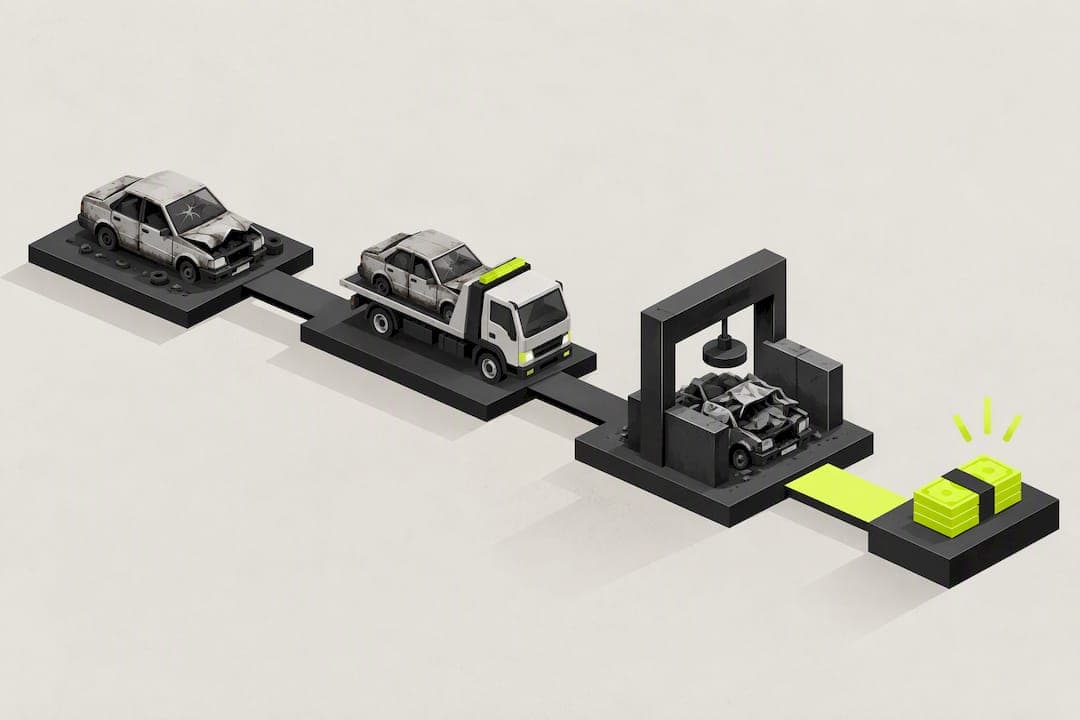
You can turn a junk car into cash by requesting an online or phone offer, scheduling a pickup, and signing over the title when the tow truck arrives. You can get an offer, set a pickup time, then hand over your keys and title for cash on the spot. The whole process, from first quote to payment, often wraps up within a few days.
TL;DR:
- The final offer for a junk car is primarily based on its weight, with added value from reusable parts like the catalytic converter and batteries.
- Proper paperwork, including a valid title and photo ID, is crucial for avoiding delays, especially if the title is lost or missing.
- Payment is usually made in cash upon pickup, with quicker transactions linked to proper documentation and accessible locations.
- Beware of scams involving upfront fees or promises of high returns without in-person inspection, and verify the buyer's legitimacy before proceeding.
- Proper end-of-life handling involves draining fluids and recycling hazardous parts like batteries to prevent environmental contamination.
Table of Contents
- Requesting an offer, scheduling pickup, and getting paid
- What determines how much you'll get for a junk car
- Prepare the car and your paperwork before pickup
- How quickly you'll get paid and what can slow things down
- Scams to watch for and how to sell safely
- What happens to your car after pickup
- Why a direct local buyer makes this easier
- Get a quote and free pickup today
- FAQ
- Sources
Requesting an offer, scheduling pickup, and getting paid
Getting a fair offer starts with a few basic details. Most buyers, including our team, ask for:
- Your vehicle's year, make, and model
- The VIN, which confirms the exact trim and specs
- A general description of condition (running, non-running, wrecked, or missing parts)
- A few photos showing the body, interior, and any major damage
An online or phone estimate gives you a ballpark figure fast, but the final number usually gets confirmed once a driver sees the car in person. On-site adjustments happen when the vehicle has more rust, missing components, or damage that was not obvious in photos. This is normal and most reputable buyers walk you through any change before finalizing payment.
Scheduling tends to be flexible. Many buyers, us included, offer same-day or next-day pickup depending on your location and the tow truck's route that day. When the truck arrives, expect a short inspection to confirm the vehicle matches the description, then paperwork.
At pickup, you will typically need to hand over:
- The signed title or acceptable alternative paperwork
- A valid photo ID matching the name on the title
- Keys, if available
Payment is usually delivered as cash on the spot once everything checks out, which is one reason this process appeals to people who want to skip waiting on a mailed check.
What determines how much you'll get for a junk car
Your car's weight is the starting point for most offers because scrap metal value is the baseline for a non-running vehicle. A heavier car or truck generally brings a higher base price than a compact sedan.
From there, a few factors shift the number:
- An intact catalytic converter can add meaningful value since it contains recoverable metals
- Reusable parts (alternators, transmissions, batteries, tires in good shape) can raise the offer
- Running condition versus non-running changes what a buyer can resell versus scrap
- A clean title versus a missing or salvage title can affect how quickly a deal closes
- Local scrap metal prices and the buyer's transport costs factor into the final number
Pro Tip: Before you call for a quote, jot down your VIN, note which parts still work, and remove personal items. That five-minute prep often speeds up the offer and avoids surprises at pickup.
Minor repairs are rarely worth it. Spending money to fix a dead battery or flat tire only makes sense if the repair cost is clearly smaller than the value increase it creates.
Prepare the car and your paperwork before pickup
The single biggest delay in junking a car is missing paperwork, so handling this first saves time. Standard requirements usually include a signed title (or salvage title if applicable), a valid photo ID, and sometimes current registration.
If you have lost the title, you are not necessarily stuck. Some states allow a replacement process or accept an affidavit of loss, and others have simpler rules for vehicles being junked rather than resold to another driver. Wisconsin, for example, allows sellers to write "Junk" across the title and does not always require a replacement title to complete the sale. Rules vary by state, so check with your local DMV or ask your buyer directly. If you are missing a title entirely, options exist for junking a car without one in many cases.
Before the tow truck shows up, run through this short checklist:
- Remove license plates if your state requires it
- Clear out personal belongings, glove box contents, and trunk items
- Photograph the VIN, odometer, and exterior condition for your own records
- Cancel your insurance policy once the sale is final
How quickly you'll get paid and what can slow things down
Most sellers move from quote to cash in a short window. A typical timeline looks like this: you get an instant estimate, schedule pickup anywhere from the same day to a few business days out, and receive payment when the tow truck arrives.
- Title problems are the most common holdup, since a buyer cannot legally complete the purchase without proper documentation
- Remote or hard-to-reach pickup locations can push scheduling back a day
- Heavy equipment needs, like a car buried in snow or stuck in mud, can add logistics time
Payment methods vary by buyer. Cash at pickup is the most straightforward and avoids the wait tied to a mailed check, while some buyers offer electronic payment for added convenience. The FTC's CARS Rule requires clear, upfront disclosure of pricing in vehicle transactions, which is part of why transparent, same-day cash deals have become the standard sellers expect.
Scams to watch for and how to sell safely
Junk car scams usually follow a pattern: a buyer offers an unusually high price, then asks for an upfront fee, a wire transfer, or refuses to inspect the car in person before "confirming" payment. The FTC has warned that scammers are cloning dealership and buyer websites to look legitimate, then pressuring sellers into unusual payment arrangements.
Protect yourself with a few simple habits:
- Verify the buyer's physical yard address and business history before agreeing to a pickup
- Insist on cash or another secure, immediate payment method rather than a promise to pay later
- Never wire money or pay any fee upfront to have your car picked up
If something feels off, such as a buyer who avoids phone calls or pushes for payment details before seeing the car, treat that as a warning sign rather than a formality to get past.
If you suspect fraud, report it at ReportFraud.ftc.gov so the FTC can track the pattern.
What happens to your car after pickup
Reputable buyers do not just haul a junk car away and forget about it. Proper handling starts with depollution: draining fluids, removing the battery, and isolating hazardous parts like mercury switches before the vehicle is dismantled or crushed, following EPA guidance on end-of-life vehicles.

This step matters because it prevents fluids and hazardous materials from contaminating soil or water while also recovering recyclable metals and parts. Batteries deserve particular attention since the EPA treats lead-acid and EV batteries as requiring specialized recycling rather than standard disposal.
If proper handling matters to you, ask a buyer directly:
- Do you drain and recycle fluids before dismantling?
- How do you handle batteries, especially from hybrid or electric vehicles?
- Where does the vehicle go after pickup?
Why a direct local buyer makes this easier
A deal that skips a broker in the middle tends to move faster and come with fewer surprises. Some buyers offer free towing on every purchase and pay cash at pickup rather than mailing a check later, with no hidden fees added once the truck arrives.
That directness cuts out extra negotiation rounds and middleman fees. Use the steps above when you call for your quote, since having your VIN, condition details, and title status ready gets you a faster, more accurate number.
— Yoshua
Get a quote and free pickup today
We make junking a car simple: request a free quote, get a no-obligation offer, and have your vehicle towed at no cost whether it runs, sits wrecked, or has been sitting without a title for years.

Here is what to have ready for a fast, accurate offer:
- Your VIN, year, make, and model
- Current title status (or details if it is missing)
- A few photos of the vehicle's condition
- Your general location in the Tri-State area for scheduling
Whether you are selling a sedan, a truck or SUV, or a car that has not run in years, you can start by requesting your instant cash offer or browsing our full range of services to see how pickup and payment work. Once you accept, we schedule your tow and pay you in cash the moment the truck arrives.
FAQ
What's the most you can get for a junk car?
The top offer depends mainly on your vehicle's weight, its catalytic converter, and any reusable parts like the transmission or battery. There is no fixed ceiling since scrap metal prices and local demand for parts shift the number, so the only way to know your car's value is to request a quote.
What is the $3,000 rule for cars?
This is not a standardized rule from a government source, and claims about it vary widely depending on who is repeating it. If you have seen this figure referenced somewhere specific, treat it as informal guidance rather than an official threshold, and confirm any claim like this directly with your state DMV or a tax professional.
Is it better to junk or scrap a car?
For most non-running or heavily damaged vehicles, junking to a buyer who pays cash and handles towing is simpler than scrapping it yourself, since you avoid arranging transport and negotiating with a scrap yard directly. Junking also typically nets you a payment for the vehicle's value rather than just its raw metal weight.
What is required to junk a car in California?
Requirements vary by state, so always confirm current rules with your local DMV before completing a sale. In general, expect to need a signed title (or acceptable alternative paperwork), a valid photo ID, and current registration, with some states offering simplified options like an affidavit when a title is lost.
Sources
- FTC announces CARS Rule to fight scams in vehicle shopping | Federal Trade Commission
- Managing Hazardous and Solid Waste from End-of-Life Vehicles
- Battery collection best practices report to Congress | EPA