Yes, in many cases you can junk a car without current registration or even without the title, though the exact steps depend on your state and whether a lien or ownership dispute is involved. Start by gathering the VIN, a photo ID, and any proof of ownership you still have, like an old registration or a bill of sale, then contact your state DMV about a replacement title or reach out to a licensed salvage buyer to ask what paperwork they accept.
TL;DR:
- State rules vary, so ask your DMV or a licensed salvage buyer whether a replacement title, bonded title, or transfer form applies to your case.
- A replacement title usually takes a couple of weeks; buyers who accept ID and ownership proof may complete transfer paperwork at pickup.
- Bring photo ID, the VIN, and any old registration or bill of sale; a paid off loan may also require a lien release.
- An unresolved lien can stop a sale, while abandoned vehicle or ownership disputes may require official notices and a waiting period before transfer is legal.
Table of Contents
- How state rules differ and why it matters
- Step-by-step options when you don't have registration or title
- Documentation checklist for the DMV or a buyer
- What to expect when selling to a junk buyer
- State exceptions and abandoned-vehicle procedures
- What experience in this business teaches about junking without a title
- Get cash for your junk car without the title hassle
- FAQ
- Where to go next
- Sources
How state rules differ and why it matters
No two states handle a missing title the same way. The differences usually come down to a few things: whether your state issues replacement or bonded titles, how strict its licensed salvage dealers are about accepting undocumented vehicles, whether older vehicles qualify for a scrappage exception, and how the state defines an abandoned vehicle.
Looking at a few examples shows the pattern. North Carolina, Georgia, Florida, and New Jersey each show up constantly in searches about junking a car without a title, and for good reason: each state's DMV sets its own documentation rules, and a process that works in one won't necessarily work in the next. That's why calling your state DMV or a buyer directly, rather than relying on general advice, saves time.
When you search for your state's process, these are the terms worth typing into the DMV site's search bar:
- "Replacement title" or "duplicate title," for a straightforward lost-title situation.
- "Bonded title," for cases where you can't prove prior ownership at all.
- "Salvage transfer," for vehicles headed to a scrap or salvage yard.
- "Abandoned vehicle," for cars left on your property by someone else or with an unknown owner.
Many state salvage dealers and junk buyers can accept a vehicle without current registration or the title itself, as long as you bring ID and proof of ownership or complete a state-specific transfer form.
Step-by-step options when you don't have registration or title
Once you know your state's terminology, here's how the main paths usually play out.
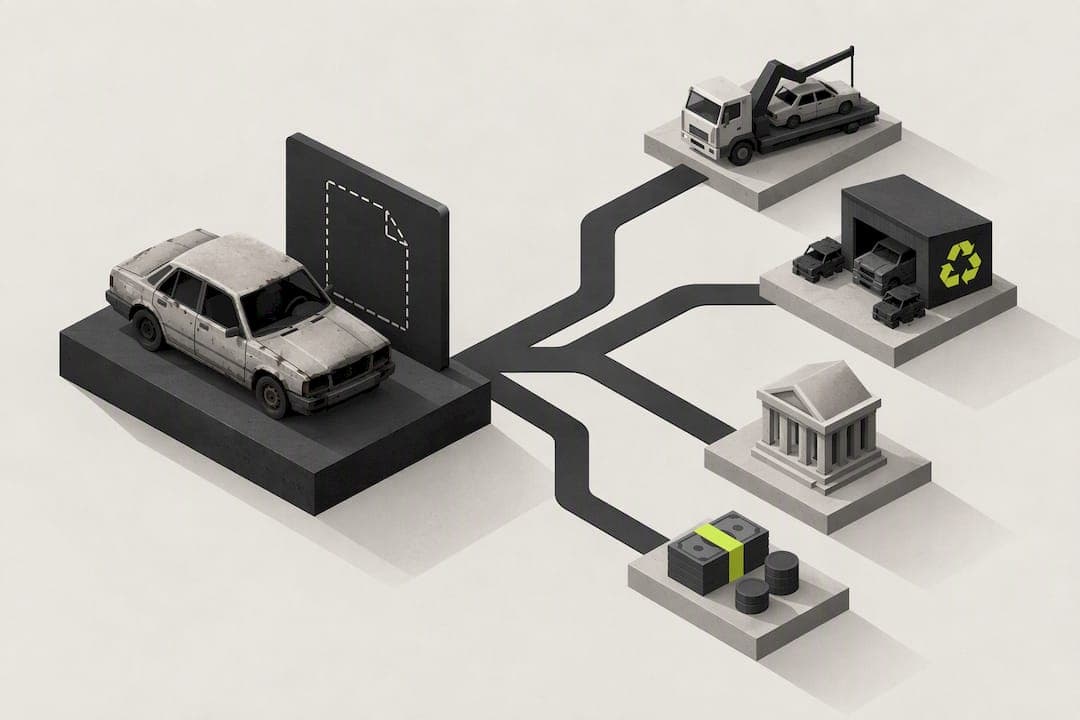
- Replace the title through the DMV. Bring your ID, VIN, and any old paperwork; most states process a replacement title within a couple of weeks, making this the right move if you have time before you need to sell.
- Sell to a licensed salvage or junk buyer that accepts vehicles without a title. These buyers typically ask for ID and proof of ownership, then complete a transfer form on the spot at pickup rather than requiring a formal title first.
- Pursue a bonded title where your state offers one. A bonded title is a type of insurance policy that protects against ownership disputes, and it's useful when you have no paper trail at all linking you to the car.
- Use the abandoned or involuntary title process for vehicles with an unknown owner or a property dispute. This route generally involves notifying local authorities and following a formal notice period before the vehicle can be legally cleared for transfer.
Some states offer replacement or duplicate titles, bonded titles, or specific DMV procedures, including involuntary title and abandoned-vehicle forms, that let owners or municipalities resolve title issues before a vehicle gets scrapped.
Pro Tip: Call ahead and ask the buyer exactly which documents they'll accept before you schedule a tow truck. It's the single fastest way to avoid a wasted pickup.
Documentation checklist for the DMV or a buyer
Having the right paperwork ready speeds up everything, whether you're heading to the DMV or scheduling a pickup.
- A valid photo ID, since both DMVs and buyers need to confirm who you are.
- The VIN, usually found on the dashboard near the windshield or on the driver's side door jamb.
- Any registration or bill of sale you still have, even an expired one.
- A lien release, if the vehicle was financed and the loan is paid off.
- An odometer reading, which some states require for the transfer paperwork.
- A power of attorney document, if you're selling on behalf of someone else.
Being prepared with your VIN, clear photos of the vehicle, and a valid ID speeds up quotes and lowers the odds that a buyer turns down the pickup over paperwork.
Each item serves a different purpose: the ID confirms identity, the registration or bill of sale establishes ownership, and the lien release proves there's no outstanding financial claim on the car. If something's missing, a quick VIN lookup, a call to a prior owner, or a message to the lienholder can usually fill the gap within a day or two.
What to expect when selling to a junk buyer
The process is fairly predictable once you've got your documents together. You request a quote, schedule a pickup time, show your ID and whatever paperwork you have, sign a release form, and get paid, often with free towing included.
A few things commonly slow this down:
- An unresolved lien that hasn't been cleared with the lender.
- Missing ownership paperwork that leaves the buyer unable to confirm you're the rightful seller.
- A property or ownership dispute involving someone else's name on the vehicle.
- Buyer caution around potential title fraud, especially on higher-value vehicles.
If a vehicle has a lien, buyers often need a lien release or confirmation that the lienholder will sign off on the transfer, and an unresolved lien is one of the most common reasons a sale falls through.
Before you schedule anything, ask the buyer what documents they require, how they pay (cash versus check), and whether they handle the DMV filing themselves or expect you to.
State exceptions and abandoned-vehicle procedures
A handful of situations fall outside the standard private-sale process. Involuntary or title-by-notice procedures typically require certified mail notices to the owner and any lienholder, followed by a mandatory waiting period before a salvage yard or municipality can legally take ownership.

Some states also allow older vehicles to be scrapped without a title under specific age or value thresholds, but this varies enough that it's worth confirming directly with your state DMV rather than assuming it applies to your car. If you're dealing with a vehicle abandoned on your property or a dispute over who legally owns it, contacting local law enforcement or the DMV directly is the right first move. Complex cases like these, as well as interstate title problems, sometimes call for a service that specializes in handling the paperwork so you're not stuck navigating it alone.
What experience in this business teaches about junking without a title
After handling junk car pickups across the Tri-State area, a few patterns hold up every time: sellers who gather their ID and VIN before calling get quotes faster, and buyers who are upfront about what paperwork they'll accept save everyone a wasted trip. We've seen that free towing and paying cash at pickup remove most of the friction sellers worry about, even when a title is missing. We buy vehicles in any condition, including ones with no title at all, as long as the seller can show ID and some form of ownership proof.
— Yoshua
Get cash for your junk car without the title hassle

- Request a free, no-obligation cash offer for your vehicle.
- Ask about our no-title process if your paperwork is incomplete.
- Schedule a pickup time that works for you and get paid when the tow truck arrives.
Ready to move forward? Get your instant cash offer and we'll handle the rest.
FAQ
Can I scrap a car without registration?
In many states, yes, as long as you can show proof of ID and some form of ownership documentation to the salvage yard or buyer. The exact requirements depend on your state DMV, so it's worth confirming before you schedule a pickup.
How do I get rid of a junk car without a title?
Common routes include applying for a replacement or bonded title through your state DMV, or selling directly to a licensed junk buyer that accepts vehicles without a title in exchange for ID and proof of ownership. Some buyers complete a transfer form on the spot at pickup rather than requiring a title upfront.
How do I junk a car in Kentucky without a title?
Kentucky, like most states, allows a replacement title application through the state DMV if you have your ID and VIN handy, and some licensed salvage buyers may accept the vehicle with alternative ownership proof. Check with Kentucky's motor vehicle division directly, since requirements can change and vary by county.
Can you junk a car without a title in North Carolina?
North Carolina generally allows licensed salvage dealers to accept vehicles without a title when the seller provides valid ID and completes the state's required transfer paperwork. Contacting the North Carolina DMV or a local salvage buyer directly is the fastest way to confirm current requirements for your situation.
Where to go next
- Request a cash offer for your vehicle.
- Learn about our no-title junk car process.