
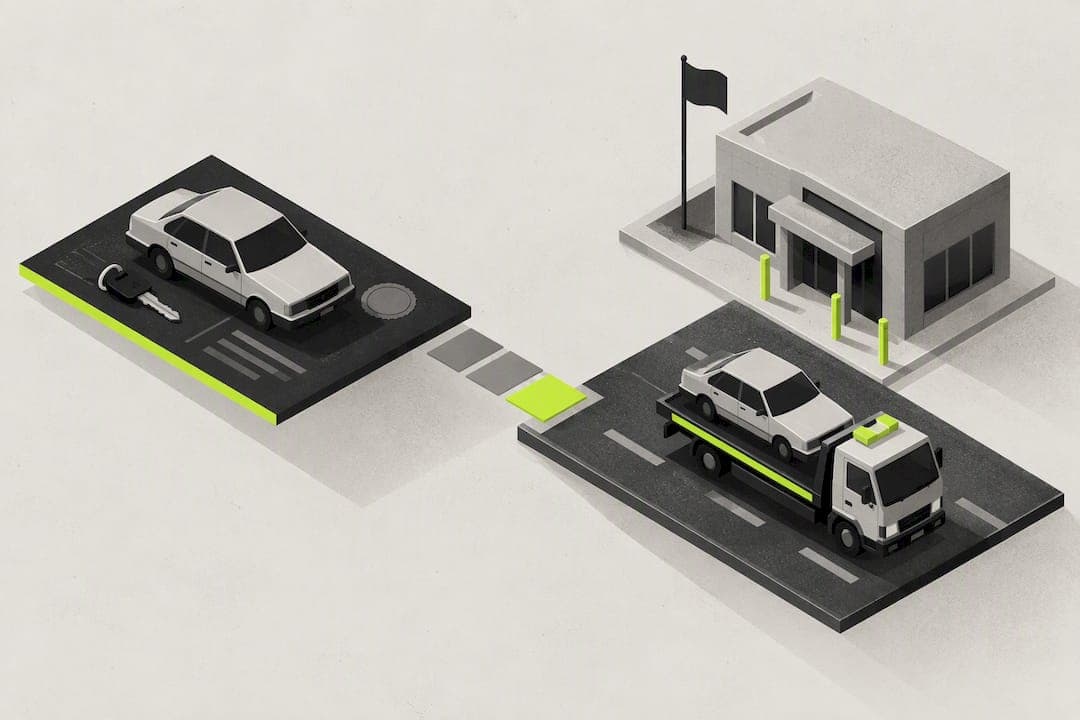
Yes, in most states you can sell a car with expired tags as long as you hold the title, since registration governs driving privileges, not legal ownership. The buyer typically handles re-registration and any back fees. You still need to complete the title assignment, file a transfer-of-liability notice, and avoid driving the car on public roads until it's legally registered again.
TL;DR:
- Check your state’s rules for required emissions or safety inspections, notarized signatures, plate handling, and the deadline for filing a transfer of liability notice.
- Complete the title assignment and federally required mileage disclosure, then document expired registration and responsibility for renewal fees in a signed bill of sale.
- File your transfer of liability notice on the day of sale, where available, to reduce exposure to future tickets, tolls, or accidents.
- Do not drive the unregistered car on public roads; use a temporary trip permit, arrange towing, or transport it on a trailer.
- A direct junk car buyer may suit nonrunning or damaged vehicles, and some accept cars without titles when sellers provide current registration and identification.
Table of Contents
- Why registration and title are not the same thing
- State-by-state differences worth checking first
- Steps to transfer the title and close the sale
- Moving the car legally once the tags are expired
- How expired tags affect price and what to put in writing
- When a junk car buyer beats a private sale
- Our take on selling with expired tags
- Get a free quote and have your car towed today
- FAQ
- Sources
Why registration and title are not the same thing
A car title proves who owns the vehicle. Registration proves the vehicle has permission to be driven on public roads. When you sell a car, you transfer the title, not the registration, which is why expired tags rarely block a sale on their own.
Federal rules still apply to the paperwork regardless of registration status. Under Part 580 odometer disclosure rules, every title transfer requires a signed mileage statement, and the regulation also covers recordkeeping and power-of-attorney procedures for cases where the title is held by a lienholder or has been lost.
A few conditions can complicate an otherwise simple sale:
- Unpaid registration fees or fines attached to the vehicle, which some states require to be cleared before transfer.
- A branded title (salvage, rebuilt, flood) that limits how the car can be resold or registered.
- Missing emissions or safety inspection records that the new owner will need before they can register the car themselves.
None of these make a sale illegal. They just mean more paperwork for you or the buyer before the car hits the road again.
State-by-state differences worth checking first
Every state handles the details differently, so a quick check before you list the car saves headaches later. Some require a smog or emissions certificate before any transfer, others mandate a safety inspection, and a few require the seller's signature to be notarized on the title itself. Trip permits and temporary registration availability also vary, as do rules on whether plates stay with the car or get surrendered.
Run through this short checklist before you agree to a sale:
- Confirm you have a clean title or know how to resolve a lien before listing the car.
- Check whether your state requires a smog, safety, or emissions test before the title can transfer.
- Find out if your state requires notarized signatures on the title or bill of sale.
- Locate your state's transfer-of-liability or Notice of Sale form and note the filing deadline.
- Decide who pays back registration fees or outstanding fines, and put that agreement in writing.
Pro Tip: Search "[your state] DMV transfer of liability" before you meet a buyer, since the form and filing window differ enough that guessing can leave you on the hook for someone else's parking tickets.
According to Dmv, the title is the key legal document in most states, while expired registration mainly affects whether the buyer can legally drive the car before renewing it.
Steps to transfer the title and close the sale
Selling with expired tags works the same as any private sale, with a few extra disclosures built in. Follow these steps in order:
- Confirm you physically hold the title, or request a duplicate from your state DMV if it's lost.
- Resolve any lien by contacting the lienholder for a release before you sign anything over.
- Sign the title over to the buyer and complete the federally required odometer disclosure.
- Write a bill of sale marked "as-is" that explicitly notes the registration is expired and states who covers renewal fees.
- Remove your plates and file the transfer-of-liability or Notice of Sale right away.
A few details matter beyond the basic steps:
- Many states give a short statutory window to file your Notice of Sale after the transaction closes, but the exact time frame varies.
- Filing online the same day, where your state allows it, is the simplest way to sever liability for future tickets or accidents.
- If the title is genuinely unavailable, a bonded title or a limited power of attorney can let the transfer proceed, as Part 580 permits when a lienholder holds the title electronically or the original is lost.
If paperwork feels like too much to untangle, selling to a buyer who handles missing-title transfers directly, like our junk car purchases without a title, removes that step from your plate entirely.
Moving the car legally once the tags are expired
Driving an unregistered car on public roads is illegal in every state, and the fines plus towing costs can add up to more than the car is worth. Before you hand over keys or drive anywhere to meet a buyer, arrange a lawful way to move the vehicle instead.
- A temporary trip permit, issued by most state DMVs, lets a vehicle travel short distances for a limited number of days, usually to get it registered, inspected, or delivered to a new owner.
- Loading the car onto a trailer or flatbed avoids the registration question entirely, since the car itself never touches the road under its own power.
- Letting the buyer arrange pickup, or selling to a service that tows the vehicle for you, sidesteps the permit process altogether.
How expired tags affect price and what to put in writing
Buyers commonly factor expired registration into their offer, since they're the ones who'll pay to bring the car current. Expect a deduction that can vary depending on your state's inspection and renewal costs as well as how overdue the registration is.
- Estimate the cost of any required smog or safety inspection before you negotiate, so you know what the buyer is actually absorbing.
- Add up any late renewal fees so both sides agree on who pays what before the sale closes.
- Put the agreement in writing on the bill of sale, noting the car is sold "as-is" with expired registration and that the buyer accepts responsibility for renewal costs and fees going forward.
Pro Tip: A single clear sentence on the bill of sale, something like "buyer acknowledges registration is expired and accepts responsibility for renewal and associated fees," does more to protect you than a verbal agreement ever will.
When a junk car buyer beats a private sale
A private sale makes sense when the car runs, the title is clean, and you have time to handle inspections and paperwork. A direct junk car buyer makes more sense when the vehicle is non-running, salvaged, missing its title, or you simply need it gone without the back-and-forth of DMV visits and buyer negotiations.
- We provide towing services to help with vehicle removal, so there's no trip permit or trailer to arrange.
- Payment happens at pickup instead of waiting on a check or bank transfer.
- We buy vehicles in various conditions, including those that don't run or have significant damage.
- We handle purchases of vehicles without a title when you can provide current registration and ID.
With a cash sale, the transfer and liability release are handled by the buyer after pickup, reducing coordination efforts compared to a private sale.
Our take on selling with expired tags
The advice that circulates most about selling a car with expired tags focuses on the wrong worry. Sellers fixate on whether the sale is legal, when the real risk sits in what happens after the handshake: an unfiled transfer-of-liability notice that leaves you responsible for a stranger's parking tickets, tolls, or worse. Signing the title over feels like the finish line, but it isn't one.

State variation gets underplayed too. Guides that treat registration rules as uniform across the country set sellers up to miss a smog requirement or a notarization step that stalls the whole transaction at the DMV counter. A five-minute check of your state's actual form and deadline beats any generic checklist.
If there's one priority to take from all of this, it's filing that Notice of Sale the same day you hand over the keys. Everything else, the price negotiation, the inspection costs, the plate removal, matters less than closing the legal loop that separates you from the car for good.
— Yoshua
Get a free quote and have your car towed today
If a non-running car with expired tags has been sitting around, we'd rather make it simple than send you back to the DMV. We offer towing, pay at pickup, and buy various vehicles in any condition, including some without a title when current registration and ID are available.

There's no pressure to accept an offer and no hidden towing fees eating into your payment. Get an instant cash offer and we'll schedule pickup around your timeline.
FAQ
Can I sell my car to Carvana with expired registration?
Dealer and broker buyers typically require clear title and ask about registration status during their inspection process, since their resale process depends on clean paperwork. Requirements vary by company and by state, so confirm directly with whichever buyer you're considering before assuming expired tags disqualify the sale.
What is the fine for an expired tag in Alabama?
Fines for expired registration vary by state and by how overdue the tags are, and no single nationwide figure applies. Check your state DMV's current fee and penalty schedule directly, since these amounts change and differ by jurisdiction.
What happens if I buy a car with expired tags?
Buying a car with expired tags is legal since the title, not the registration, transfers ownership, but the buyer generally can't legally drive the car until it's registered in their name. Most buyers factor registration and inspection costs into their offer, and the transfer-of-liability step protects the seller once the sale closes.
Can you sell a car with expired registration in NC?
In most states, including cases with expired registration, you can sell a car as long as you hold a valid title, since registration affects driving privileges rather than ownership. Confirm your state's specific transfer paperwork and any inspection requirements before finalizing the sale.
What documents do I need to sell a car with expired tags?
You'll need the signed title with completed odometer disclosure, a bill of sale noting the car's "as-is" condition and expired registration status, and your state's transfer-of-liability or Notice of Sale form. If the title is lost, a duplicate title or limited power of attorney under Part 580 can allow the transfer to proceed.
For buyers tackling common paperwork mistakes beyond registration status, this used car paperwork guide covers red flags worth watching for during any title transfer.