
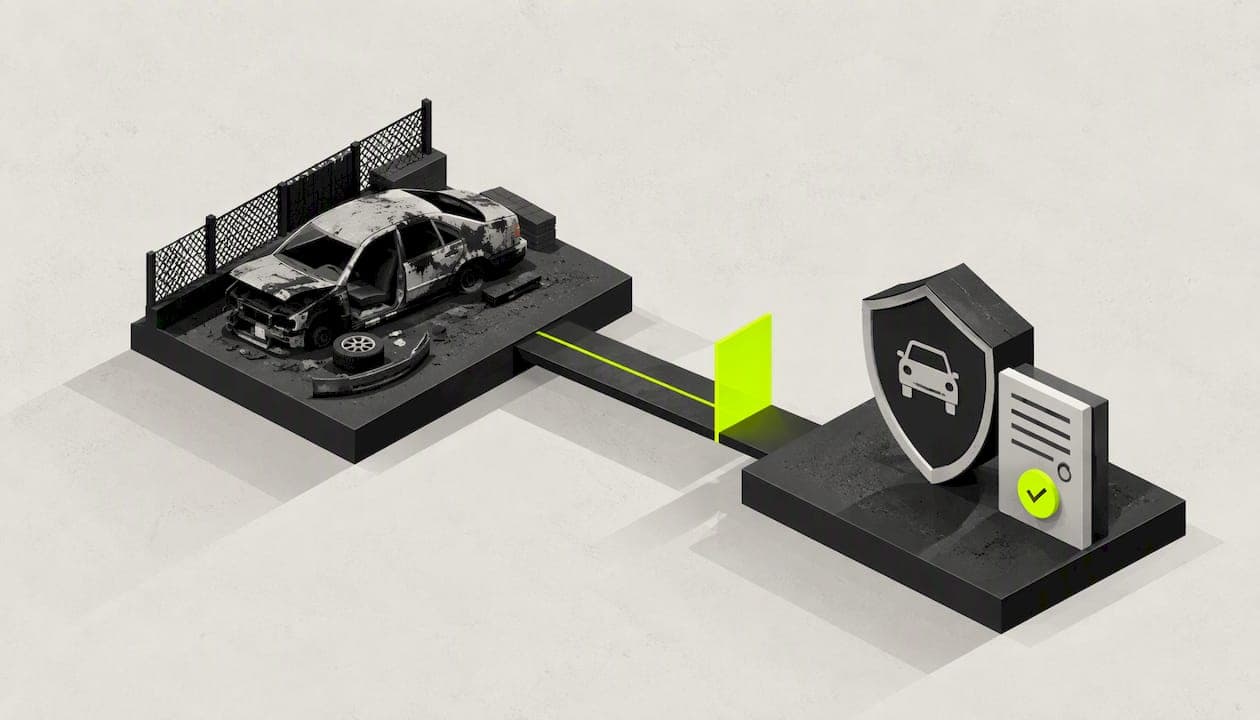
Cancel your car insurance after the car has actually left your hands: the buyer has paid, the tow truck has pulled away, and your paperwork is signed and filed. Cancel earlier and you can be left with a legally tied-to-you vehicle and no coverage. Cancel and forget the plates or the state notice, and you can end up with fines or a lapse on your record. The order of operations matters more than the speed.
TL;DR
- Wait until the sale or transfer of ownership is final before you cancel. Then call or write to your insurer and ask for a cancellation date in writing.
- Do the state paperwork first: a release of liability or transfer notice where your state offers one, and plates handled the way your state requires.
- Do not just stop paying. Your policy will be canceled anyway, and it can hurt your credit and your future rates.
- If you are buying another vehicle soon, ask about moving coverage to it instead of canceling, so you avoid a gap.
- Ask for any prepaid premium back. Insurers differ on timing and fees, so get the numbers before you confirm.
Table of Contents
- The short answer on timing
- Why you should not cancel before the car is gone
- Before you cancel: the state paperwork
- How to cancel, step by step
- Refunds and fees
- Do not just stop paying
- What if the car is already gone and you never canceled?
- Perspective: what we see on pickup day
- Selling the car first: how we can help
- A quick timeline you can follow
- FAQ
- Sources
The short answer on timing
Progressive's guidance is to wait until the sale or transfer of ownership is finalized before canceling coverage. Amica says the same thing from the other direction: canceling too early can create a coverage gap while the vehicle is still legally tied to you.
That is the rule. The reason is practical. Until the car is gone and the title or ownership record has moved, you can still be held responsible for it. If it is stolen from your driveway the night before pickup, or rolls on a tow ramp, you want the policy still in force.
For a junk car, "final" means all of these are true:
- The buyer has paid you.
- The vehicle has physically left your property.
- You have signed over whatever document your state requires and kept a copy.
- You have filed any state notice of sale or release of liability.
Only then does cancellation make sense. If you are working through a local buyer, this usually all happens in a single visit, which makes the sequence simple. Cash and a signed bill of sale in your hand, then you make the insurance call the same day or the next morning.
Why you should not cancel before the car is gone
People often cancel the moment they agree on a price. It feels tidy. It can also backfire in a few ways.
- The pickup falls through. Buyers get delayed, tow trucks break down, and appointments move. If the car sits on your street uninsured for a week, any damage or claim lands on you.
- Registration is still active. In most states a registered vehicle needs liability insurance, whether or not it runs. Some states track this electronically and penalize gaps.
- A lapse follows you. Progressive notes that canceling creates a lapse in coverage, which may mean higher future rates, and canceling too soon can also lead to fines or license suspension. That matters most if you have another car on the road or plan to buy one.
One caution on that last point. The lapse that matters most is on a vehicle you still drive or plan to drive. If this was your only car and you will not own another for months, the lapse concern is smaller, but it is still worth asking your insurer how a gap is recorded before you decide.
Before you cancel: the state paperwork
This is the step most articles bury, and it is where the real fines come from. Progressive tells sellers to check whether their state requires a Notice of Release of Liability and whether you must notify the DMV after canceling insurance. State Farm makes a related point: many states require you to inform the DMV when you cancel or change auto insurance, and it advises checking your state's guidelines or asking your agent.
States handle this very differently. Two examples show how much.
| State | What the official source says |
|---|---|
| Maryland | As long as you possess tags, you must carry liability insurance in the required state minimum amounts. Canceling while you still have the tags may bring an MVA fine of $200 for the first 30 days, then $7 per day per vehicle until you reinstate insurance or turn in the tags. |
| Texas | Once you file a vehicle transfer notification with the DMV, you are no longer responsible for the buyer's parking tickets or toll violations. |
Maryland shows why plates and insurance have to be settled together. Texas shows why the notice of sale protects you after the car is gone. Your state may sit somewhere else on that spectrum, so look up its rules on the official DMV or BMV site before you call your insurer.
Ohio and Kentucky sellers
We work with sellers across Cincinnati and the Tri-State area, so these two states come up daily. We are not a government office, and the rules can change, so confirm the details with the Ohio BMV or the Kentucky transportation cabinet's vehicle registration office. What we can tell you from the field is what sellers should have in hand before the insurance call:
- The signed title, or the documents that stand in for it. If yours is missing, read our guide to junking a car without registration and the steps to get a duplicate title or sell without one.
- A written record of the sale. Our post on the junk car bill of sale in Ohio covers what to write on it.
- A plan for the plates. Ask the BMV or your county clerk whether they stay with you, go back to the state, or move to your next vehicle. Our Ohio and Kentucky paperwork checklist lists what to have ready on pickup day.
If your tags are expired, that is a separate wrinkle, and it does not mean you cannot sell. See selling a car with expired tags for the DMV checks.
How to cancel, step by step
Once the car is gone and the state steps are done, cancellation itself takes about ten minutes.
- Gather your policy number and the sale date. Have your bill of sale or a photo of the signed paperwork nearby, in case the insurer asks.
- Decide whether to cancel the whole policy or just remove the car. If you have other vehicles on the policy, you are removing one car, not canceling everything. The premium will drop accordingly.
- Contact the insurer the way it requires. Some let you cancel online or by phone. USAA, for example, tells members to call 800-531-USAA (8722) to talk to a representative. State Farm says to contact your local agent by phone or in person.
- Put it in writing. Insurance broker Peter Conte suggests sending cancellation notices in writing by email so there is a clear paper trail. Even after a phone call, follow up with a short email stating the vehicle, the sale date and the cancellation date you were given.
- Ask three questions before you hang up: What is the effective cancellation date? Is there a cancellation fee? When and how will my refund arrive?
- Keep the confirmation. Save the email or letter for at least a year, along with your bill of sale.
If you are buying another car
Policygenius points out that keeping your policy active while the car is still technically yours can let you add a new vehicle with minimal fuss and prevent a gap in coverage. Progressive likewise says that if you are buying a new vehicle, you can add it to your current policy rather than canceling. In that case the move is to swap the vehicles, not end the policy.
Refunds and fees
You paid for coverage you will no longer use, so ask for the unused part back. Practices vary by company. USAA says that in most cases it refunds prepaid insurance within 3 to 10 business days unless you have an outstanding balance. Insurance.com notes that some insurers may charge a cancellation fee, and the amount varies.
What that means for you:
- If you paid in full for six months and cancel with two months left, you are owed a share of the premium, less any fee your insurer charges. Ask whether the refund is calculated day by day or with a short-rate penalty.
- If you pay monthly, you may have little prepaid money to recover. Your goal is to stop the next billing date.
- If you still owe a balance, the insurer will usually net it against the refund.
Cancel the cancellation fee question early, not after the fact. If the fee is real, a cancellation date a few days earlier or later may change the math.
Do not just stop paying
It is tempting to let the bill go unpaid and assume the policy ends. It does end, but not cleanly. USAA warns that not paying your bill can affect your credit and your ability to get other insurance, and that you may pay higher rates if you come back. A non-payment cancellation can also leave a balance in collections. A phone call and an email cost nothing by comparison.

What if the car is already gone and you never canceled?
It happens all the time. Someone junks a car in spring and finds the premium still leaving their account in fall. Do this:
- Find your bill of sale, a text from the buyer, or any pickup confirmation.
- Contact the insurer, give them the actual pickup date, and ask them to remove the vehicle effective that date.
- Ask whether a refund is possible for premiums paid after that date. Some insurers will backdate, some will not, so ask politely and in writing.
- Check your state's rules on plates and registration. If you are still on record as the owner, fix that first.
This is why a signed bill of sale is not optional paperwork. It is your proof of when ownership ended.
Perspective: what we see on pickup day
We buy junk cars from owners in Cincinnati and across the Tri-State area, and insurance is the question sellers ask last, usually while the truck is already in their driveway. Our view is simple: treat the pickup as the finish line, not the starting gun.
Because we pay cash at pickup, the sale ends the moment the car leaves, so the sequence is easy to follow. You sign, you get paid, the car goes, and then you call your insurer with a clear date. We do not make sellers wait on a check, and we do not take last-minute deductions, so there is no question about whether the deal is done. If a buyer cannot say when the money moves, you cannot say when to cancel.

Two habits save people the most trouble. First, keep a copy of everything you signed, with the date and time of pickup written on it. Second, do not cancel until the car is gone, even if the buyer is only a day away. A single uninsured night is a cheap gamble until it is not.
We also buy vehicles that do not run, are wrecked, flood-damaged or have high mileage, so sellers often have a car that has sat uninsured or lightly insured for months. That is fine. The same rule holds: handle the state steps, then end the coverage.
— Yoshua
Selling the car first: how we can help
If your junk car is still in the driveway, the insurance clock cannot start. Get the sale done and the rest follows. Our instant cash offer page gives you a free, no-obligation quote, and our free junk car removal means we tow it at no charge and pay cash on the spot. If your title is missing, we explain how that works on our no-title page. You can also see everything on the cash for junk cars page. If you are still deciding whether it is time to let the car go, our guide on when to junk a car walks through the math and timing.
A quick timeline you can follow
| When | What to do |
|---|---|
| Before pickup | Find your title or ID and registration. Keep insurance active. Look up your state's notice-of-sale and plate rules. |
| At pickup | Confirm the price, get paid, sign the transfer, and get a signed bill of sale with the date and time. |
| Same day | File the release of liability or transfer notice if your state offers one. Handle the plates as your state requires. |
| Next business day | Contact your insurer, cancel or remove the car, and ask for the effective date and refund details in writing. |
| Within a few weeks | Check that your refund arrived and that no further charges appear. Keep the records. |
FAQ
Can I cancel my insurance as soon as I agree to sell the car?
It is safer not to. Insurers and carriers such as Progressive and Amica advise waiting until the sale is final, because canceling early can leave a gap while the car is still tied to you. Wait until the car has left and the paperwork is signed.
Do I have to tell my state DMV after I cancel?
It depends on the state. State Farm says many states require you to inform the DMV when you cancel or change coverage, and Progressive tells sellers to check for a release of liability notice. Check your state's DMV or BMV site, or ask your agent, before you cancel.
Will I get money back if I cancel?
Usually, if you prepaid. USAA, for one, says most prepaid premiums are refunded within 3 to 10 business days unless you owe a balance, and other insurers may charge a cancellation fee. Ask your insurer for the exact figure before you confirm.
Can I stop paying instead of canceling?
It is a bad idea. The policy will be canceled for non-payment, which can affect your credit and make future insurance more expensive. Contact your insurer and cancel properly instead.
Sources
- When to Cancel Insurance After Selling a Car, Progressive
- What to Do With Insurance When Selling a Car, Amica
- How Does Scrapping a Car Affect Insurance?, Policygenius
- Cancel your Auto Insurance Policy, USAA
- How to Cancel Your State Farm Insurance Policy
- How to cancel auto insurance, Insurance.com
- Vehicle Registration FAQs, Maryland Insurance Administration
- What to do with insurance when you're selling a vehicle, Texas Department of Insurance