
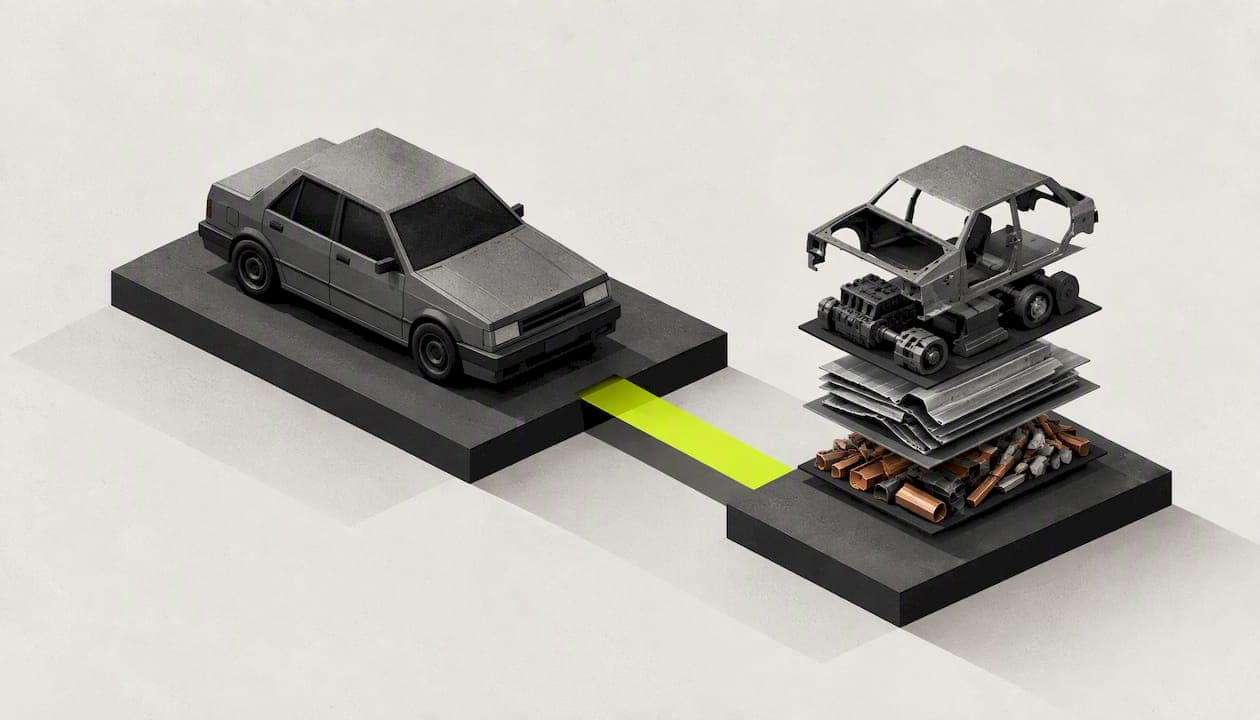
A junk car's scrap value comes from its metal weight plus the value of parts a recycler can recover, minus the cost of handling fluids and hauling. The EPA's end-of-life vehicle guidance and the Department of Energy's average vehicle weight data both support that math. Check your curb weight, then ask us at Cincinnati Junk Cars for Cash for an instant cash quote with free pickup.
TL;DR:
- The Department of Energy puts the average passenger vehicle at about 3,350 pounds; check your model’s curb weight, then discount fluids and tires.
- Catalytic converters, batteries, aluminum wheels, and working engines or transmissions can lift an offer, so disclose them but leave removal to the recycler.
- Ask whether each quote is your net payment after towing and disposal deductions, because those costs can reduce gross offers.
- Disclose leaks, flood damage, salvage status, missing parts, and other problems before pickup; undisclosed issues can trigger an on the spot price change.
- Accept cash or immediate electronic payment at pickup, and keep the keys and title until you receive payment and a signed receipt.
Table of Contents
- How do recyclers calculate scrap value for a whole vehicle?
- How do you estimate your car's scrap weight and value?
- Which parts and conditions raise a junk car's offer?
- What should you prepare before selling a car for scrap?
- What happens after you accept an offer?
- Why the weight-plus-parts approach is the lowest-risk route
- Turn your weight estimate into instant cash with free towing
- FAQ
- Sources
How do recyclers calculate scrap value for a whole vehicle?
Recyclers do not buy a car as a lump of steel. They price the whole vehicle: the metal in the hulk, the parts they can pull and resell, and the cost of safely handling what is left over.
The Department of Energy's materials breakdown shows why weight alone is only a rough guide. A passenger vehicle is built from iron and steel, aluminum, plastics, glass and other materials, and only the metals carry meaningful scrap value. Ferrous metal (steel and iron) makes up most of the weight and sells at a lower price. Nonferrous metal (aluminum, copper) is lighter but worth more per pound. A car’s mix of materials can affect how much scrap value it yields per pound.
Here is what moves an offer:
- Hulk weight: the crushed vehicle body is sold by weight once everything else is removed.
- Recoverable parts: catalytic converters, batteries and aluminum wheels may be removed before crushing and sold separately.
- Hazardous materials: fluids, batteries and switches may need to be removed and disposed of properly, which can add costs.
- Transport: distance and towing effort come out of what the buyer can pay.
The EPA explains that once hazardous liquids are drained, a facility can sell the crushed hulk for profit, and that pulling nonmetallic components first can raise the hulk's value.
EPA guidance says that once salvageable parts and hazardous materials are removed, the hulk becomes the primary scrap product. That is why an intact car with its parts still on it may be worth more than a messy, half-stripped one.

How do you estimate your car's scrap weight and value?
You do not need a scale to start. Use these steps in order, from easiest to most accurate:
- Look up the curb weight. Check the owner's manual, the sticker inside the driver's door jamb, or the manufacturer's online specs for your exact year and model.
- Use a public scale. A truck stop or municipal scale can weigh the car. Tell the operator the tank is nearly empty and no one is inside, so you get a weight that better reflects the vehicle without passengers or cargo.
- Ask the buyer to weigh it at pickup. Confirm how they figure net weight and which deductions they apply before you agree.
- Adjust for nonmetal items. Fluids and tires add weight but little scrap value, so treat the raw number as a ceiling.
With no other data, the Department of Energy puts the average passenger vehicle at about 3,350 pounds of curb weight without passengers or cargo. That makes a handy starting number for a sedan.
For a worked example, multiply the car’s weight by the yard’s per-pound rate to estimate the metal value before counting any parts. Your actual price will differ, because rates change and every yard sets its own.
Pro Tip: Ask every buyer whether their quote is a gross figure or what you actually receive after towing and handling deductions.
For a longer walkthrough, our junk car value guide shows how to build an estimate yourself.
Which parts and conditions raise a junk car's offer?
Weight sets the floor. Parts lift the offer above it, and they are the main reason two cars of the same weight can get very different quotes.
- Catalytic converters: they contain valuable materials and may contribute significantly to an end-of-life car’s offer.
- Lead-acid batteries: recyclers reclaim the lead, and the EPA notes that lead parts such as wheel weights and battery cable ends have recoverable value and are kept separate for smelters or recyclers.
- Aluminum wheels: they may contribute scrap value and can be removed before crushing.
- Engines and transmissions: if they are in good condition, they can be resold to repair shops and restoration projects.
- Electronics and wiring harnesses: intact units add resale and copper value.
Tell the buyer about every one of these when you ask for a quote. Skip the temptation to strip the car yourself. Recyclers have the tools and the buyers to extract these parts cleanly, while amateur removal can break components or spill fluids, which lowers the value and leaves hazardous waste for them to manage.
What should you prepare before selling a car for scrap?
A little prep keeps the sale quick and the payment on time. Gather these items first:
- Title, if you have it: it is the cleanest way to transfer ownership. Rules vary, so confirm with the buyer what is accepted if it is missing. We also explain how we handle cars without a title.
- Photo ID and current registration: the buyer needs both to complete the transfer.
- Personal items removed: check the glove box, trunk, door pockets and under the seats.
- Loose parts secured: tie down or remove anything that could fall off during towing.
- Leaks and hazards noted: tell the buyer about fluid leaks or damage.
- Honest condition report: disclose flood damage, salvage branding, or a missing engine.
Accurate condition details prevent surprise deductions at pickup. A buyer who finds an undisclosed problem when the truck arrives has to reprice on the spot, and that is where most sellers feel burned. Telling them up front keeps the quote and the final payment the same.
What happens after you accept an offer?
Pickup timing varies. Longer tow distances and cars that need extra hazardous-material handling can add time.
- Costs built into the offer: transport and hazardous-material disposal come out of the buyer's margin, so ask whether your number is gross or net.
- Payment: request cash on pickup or immediate electronic payment, never a check that arrives later.
- Paperwork: get a written receipt at the moment of transfer.
Pro Tip: Do not hand over the keys or title until you are holding the payment and a signed receipt.
Scrap prices move with the market, so a quote can change over time. Our scrap car prices update gives local context, and our post on same day cash sales covers how to avoid scams.
Why the weight-plus-parts approach is the lowest-risk route
Here is our view: stop thinking of your car as a pile of metal and think of it as a complete asset. The EPA and the Department of Energy both describe a vehicle whose value depends on what comes out of it as much as on what it weighs. That makes the simplest path the best one: weigh it, get a quote, and take the offer that pays promptly and includes pickup. We offer instant cash and free towing for exactly that reason, so there is nothing to haul, strip or wait on. Get at least one quote, compare what you would actually receive, and choose the buyer who pays on the spot.
— Yoshua
Turn your weight estimate into instant cash with free towing

If you want a fast sale without pulling parts yourself, we buy cars, trucks and SUVs in any condition across Cincinnati and the Tri-State area.
- Free towing: we pick up your vehicle at no charge, with no hidden fees.
- Instant cash: we pay at pickup, with no waiting on a check.
- Free quotes: you get an offer with no pressure to accept.
- Any condition: wrecked, salvaged, not running, or missing a title.
Start with our cash for junk cars page to request a quote, or schedule a pickup through our free junk car removal service.
FAQ
How is scrap value by weight calculated for a car?
Buyers start with the vehicle's metal weight, then add the value of recoverable parts and subtract handling and towing costs. Weight sets the baseline, but parts like the catalytic converter often move the offer more than pounds do.
What is the average weight of a junk car?
The Department of Energy lists the average passenger vehicle at about 3,350 pounds of curb weight without passengers or cargo. Your own car may be lighter or heavier, so check the door sticker or the owner's manual.
Should I remove parts before scrapping my car?
Usually not. Recyclers extract and sell parts more efficiently, and DIY removal can break components or create hazardous spills that lower your offer.
How do I check that a scrap quote is fair?
Ask whether the quote is gross or net after towing and disposal costs. Compare more than one offer, and call local recyclers for current steel prices, as EPA Region 9 resources recommend.
Sources
- Managing Hazardous and Solid Waste from End-of-Life Vehicles
- Chapter 8: Advancing Clean Transportation and Vehicle Systems and Technologies | Lightweight Automotive Materials Technology Assessment