
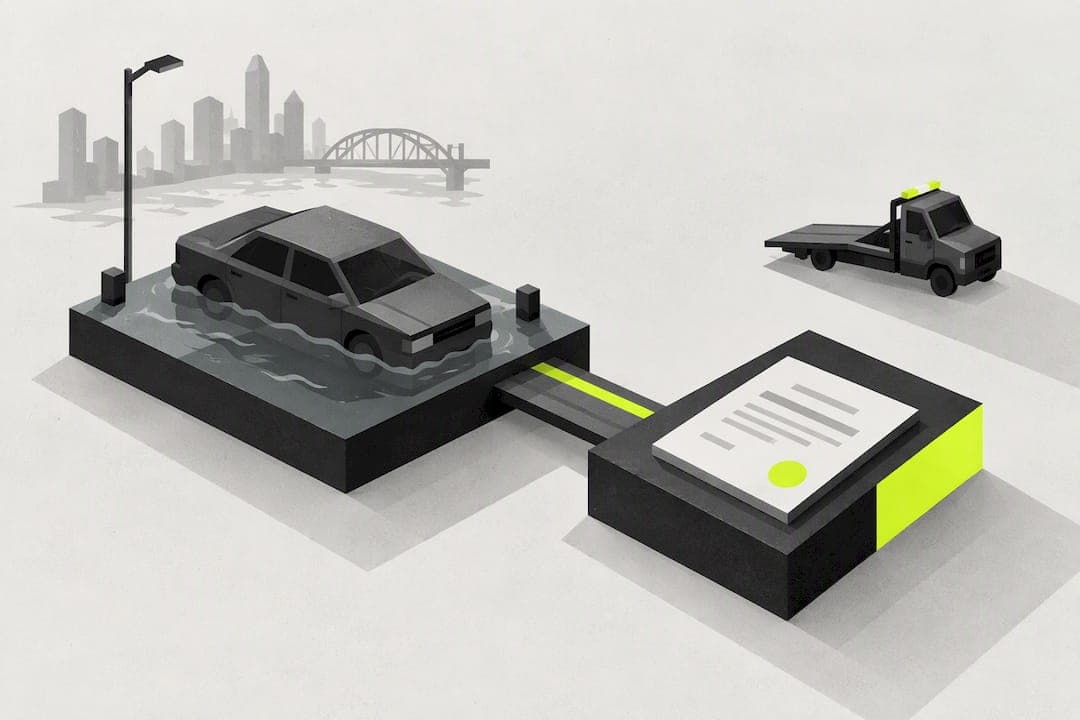
The fastest realistic paths are an insurance total-loss settlement if you're covered, a sale to a junk or salvage buyer for cash at pickup, or a private sale only with full written disclosure of the flood damage. Expect the title to carry a salvage or flood brand once it's reported, and never start the engine before a mechanic checks it. Document the waterline with photos before you do anything else.
TL;DR:
- NMVTIS consolidates title and total loss reports, but state differences and reporting delays can leave records incomplete temporarily, so keep independent sale documentation.
- For a private sale, disclose flood damage in writing, confirm the title status, and complete an odometer statement signed by both parties.
- Saltwater causes faster corrosion than freshwater, and damage to dashboard wiring, engine intake, or electronic modules can sharply reduce a vehicle’s value.
- Salvage auctions may draw competitive bids, but they can take weeks and deduct fees before payment; direct salvage buyers often collect the car the same day.
Table of Contents
- Quick selling options and when to use each
- How insurers, total-loss determinations, and title branding work
- What flood damage does to value and what buyers look for
- Required paperwork and how to disclose flood damage correctly
- Safety and prep before showing, moving, or attempting repairs
- Balancing speed, safety, and getting paid
- How Cincinnati Junk Cars for Cash helps owners sell flood-damaged cars now
- FAQ
- Sources
Quick selling options and when to use each
If your comprehensive insurance covers flood damage, file the claim first. When the insurer declares a total loss, it typically pays you the vehicle's actual cash value and takes the title, then consigns the car to a salvage auction. You walk away without the vehicle and without the paperwork headache.
If you're uninsured, underinsured, or just want the car gone fast, a junk or salvage buyer is usually the most practical route. These buyers inspect or ask about the damage, make a cash offer based on weight and condition, and often arrange same-day pickup. Selling through a salvage auction yourself is possible but slower, often weeks, and payment usually arrives after the auction closes and fees are deducted.
A private sale can work, but only with complete, documented disclosure of the flood history. Expect lower offers since informed buyers price in repair risk and the branded title.
- Insurance route: best when you're covered and want the insurer to handle removal and title transfer.
- Junk or salvage buyer: best for speed, cash in hand, and no listing hassle.
- Salvage auction: best when you want a competitive bid and can wait weeks for payment.
- Private sale: best only when you can fully disclose damage in writing and accept a lower price.
How insurers, total-loss determinations, and title branding work
A total loss happens when repair costs exceed a percentage of the vehicle's value set by the insurer or state formula. When that happens, many insurers keep the title, pay you the settlement, and send the car to auction rather than returning it to you. Once a flood or salvage brand is applied, it follows the vehicle through every future title transfer, in every state that honors the original brand.
That's where the National Motor Vehicle Title Information System matters. NMVTIS aggregates title-brand and total-loss reporting from insurers, junk yards, and salvage pools so buyers and sellers can see a vehicle's history in one place.
NMVTIS is the federally backed system designed to catch exactly this problem: it collects total-loss and flood-brand data so a car cleaned up and moved to another state still shows its history when someone checks. Reporting delays and state-by-state differences mean the record isn't always instant, so keep your own documentation as backup.
What flood damage does to value and what buyers look for
Value drops fastest when water reaches the dashboard wiring, infotainment modules, or engine intake. Saltwater exposure is worse than freshwater because it accelerates corrosion in connectors and metal components long after the car looks dry.
Experienced buyers check for the same tells every time:
- Musty or heavy air-freshener odors meant to mask mold.
- Mismatched carpeting, seat trim, or fasteners that suggest replaced interior parts.
- Corroded or discolored electrical connectors under the dash and seats.
- Silt or sand packed into seat tracks, trunk corners, or the spare tire well.
Cash buyers who purchase by weight and condition, rather than by resale potential, generally don't discount as sharply for cosmetic flood signs since they're not betting on a clean repair. That's part of why a junk or salvage buyer can still offer a fair number when a private buyer walks away.
Required paperwork and how to disclose flood damage correctly
Selling a flood-damaged car legally takes more than a handshake. Follow these steps in order:
- Confirm the title status. Check whether your state has already branded the title salvage or flood, and request a corrected title if the insurer processed a settlement.
- Complete the odometer disclosure. Federal rules require a written mileage statement signed by both buyer and seller at transfer, and skipping this step can create titling problems later.
- Document the damage. Photograph the waterline, interior, and engine bay with timestamps, and keep any mechanic notes or repair estimates.
- Write a clear bill of sale. Include the sale price, "as-is, flood damage disclosed" language, the odometer reading, and both parties' signatures.
- Verify history before closing. Point the buyer to NMVTIS or check it yourself so there's no dispute about what the title shows.
Keep copies of everything. If a dispute surfaces months later, your documentation is what protects you.
Safety and prep before showing, moving, or attempting repairs
Don't start the engine. Water in the cylinders can cause hydro-lock, which bends rods or cracks the block the moment the engine turns over, turning a repairable car into scrap. Before anyone test-drives or repairs the vehicle, have a mechanic inspect the electrical modules and airbag system, since water intrusion can disable safety systems without any visible warning.
In the short term, prop doors open to air out the cabin, remove soaked carpeting if you can, and photograph everything before mold sets in. Arrange a flatbed tow rather than driving the car, even a short distance.

Pro Tip: Keep the mechanic's written inspection notes with your sale documents; they back up your disclosure if a buyer ever questions what you knew.
Balancing speed, safety, and getting paid
For most owners, the fastest legitimate outcome is either working the insurer's total-loss process or selling to a cash buyer who handles pickup the same day. Chasing a slightly higher private-sale number rarely makes sense once you factor in the disclosure paperwork, the lower buyer pool, and the liability if something was missed.
Disclosure protects you from a fraud claim down the road. Safety protects the next person who gets behind the wheel, and it protects you while the car still sits in your driveway.
— Yoshua
How Cincinnati Junk Cars for Cash helps owners sell flood-damaged cars now
We buy flood-damaged vehicles in various conditions and do not require repairs in advance. We arrange towing at no cost to you, provide a no-obligation cash offer on the spot, and pay at pickup rather than mailing a check or waiting on paperwork to clear.

This works best for owners who want the car gone this week, not a buyer to negotiate with over weeks of listings and showings. Before we arrive, have these ready:
- Your title, or current registration and ID if the title is lost.
- Any mechanic notes or photos documenting the flood damage.
- Keys and the vehicle's location for pickup.
Start with a free quote on your junk car, or check our instant cash offer page if you're ready to set a pickup time.
FAQ
Is it illegal to sell a flood-damaged car?
Selling a flood-damaged car is legal as long as you disclose the damage and the title accurately reflects any salvage or flood brand. Hiding known flood damage can expose you to a fraud claim, so written disclosure at the time of sale is your best protection.
What is the $3000 rule for cars?
Total-loss thresholds are set by each insurer or state formula based on the percentage repair costs represent of the vehicle's value, so the threshold that applies to you depends on your policy and state.
Is it worth fixing a flooded car?
It depends on how far the water reached. Engine, transmission, or widespread electrical module damage usually makes repair costs climb fast, and saltwater exposure in particular tends to cause corrosion that resurfaces months after a repair looks finished.
What is the best way to sell a totaled car?
For most owners, filing an insurance total-loss claim or selling to a junk or salvage buyer for cash at pickup is faster and simpler than a private sale. A private sale can net more money, but only if you fully disclose the damage and accept a smaller buyer pool.
Sources
- Hurricane and flood-damaged vehicles guidance — NHTSA
- Buyer beware: Safety hazards of flood-damaged vehicles — NMVTIS / BJA
- How to steer clear of a flood-damaged car — FTC